
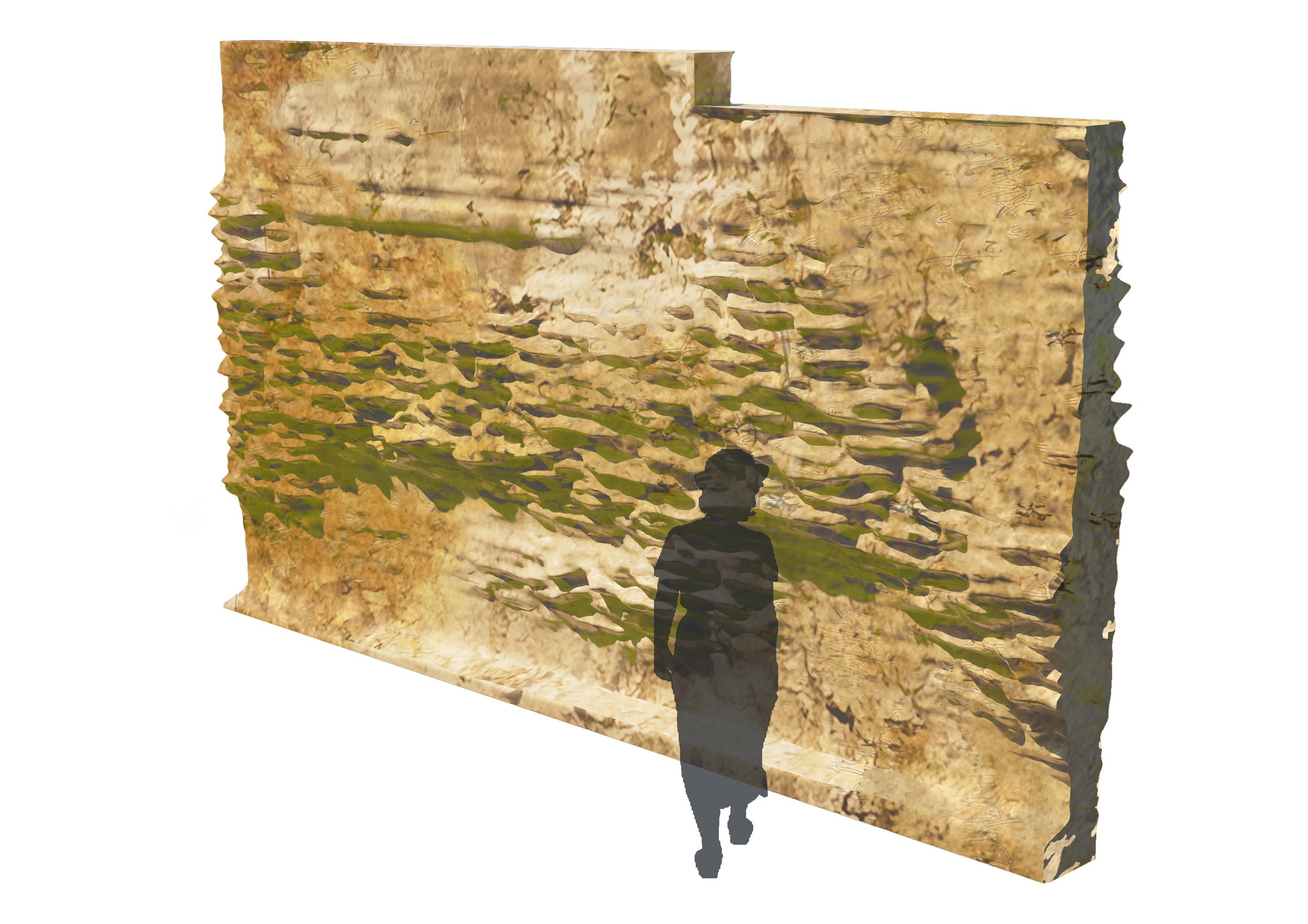
Stacked
Reimagining Brick Boundary Walls
2023 Bio-ID Year 1
Studio Professors: Ian Robinson, Pradeep Devadass, and Javier Ruiz Rodriguez
Can material be re-presented to hold different meaning?
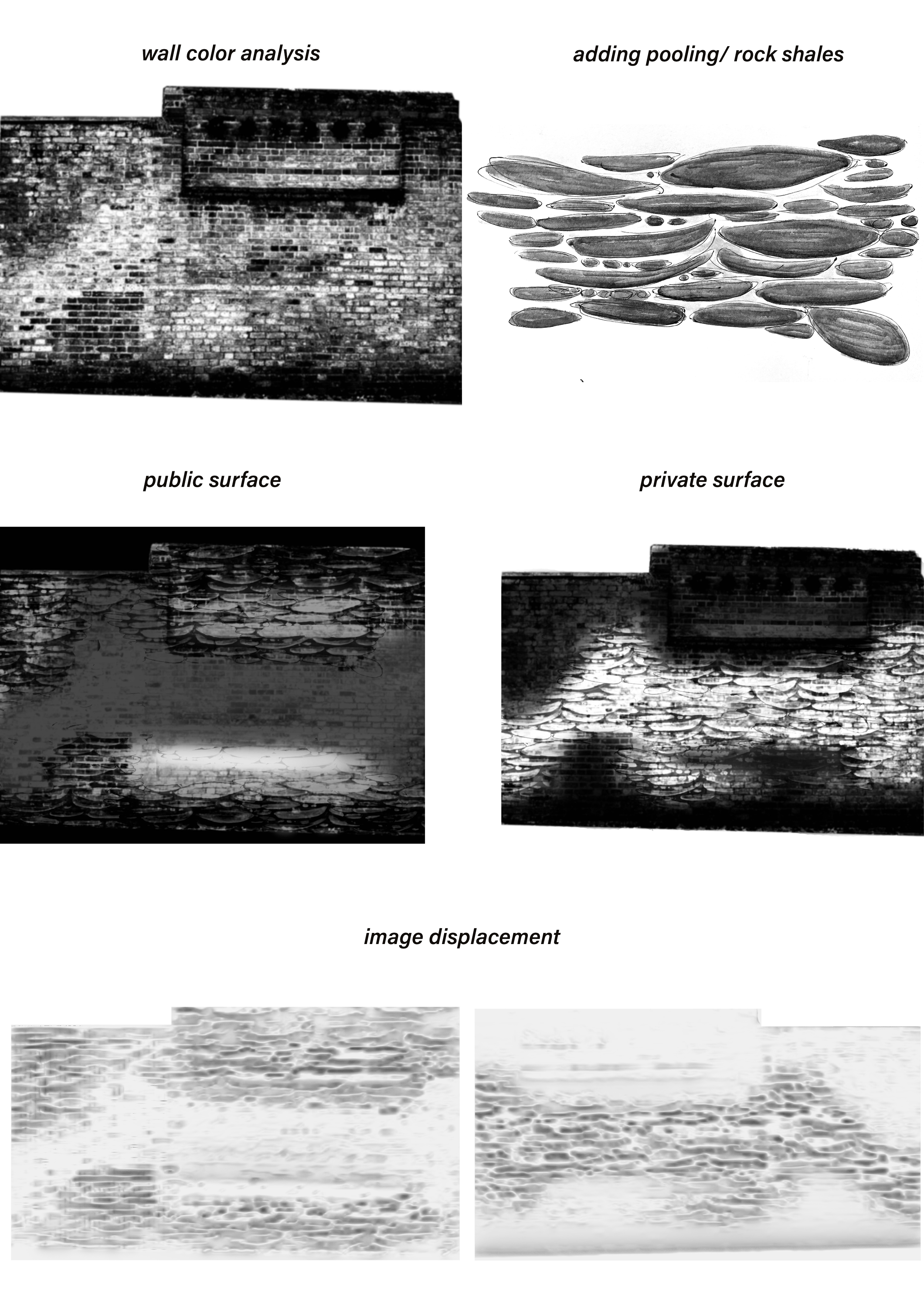
In a city with limited private space, the brick wall separates public and private space from knowledge of the other side. This design reimagines the brick wall as a porous and feral condition that brings consciousness to the heterogeneous nature of a brick wall, even though they are perceived as homogeneous. Situated on Gloucester Avenue in Camden, London, this design works to reduce air pollution from PM2.5 through moss and increases the biodiversity of the wall by creating a condition that reduces the control that private users have over the wall. The concept of rewilding a wall by restructuring its existing properties was explored through material, biological, and digital means in order to hypothesize on how this less static design might erode under dynamic conditions and grow over time once human ownership is lessened and time is seen as a spatial designer.
Site: brick wall on Gloucester Avenue
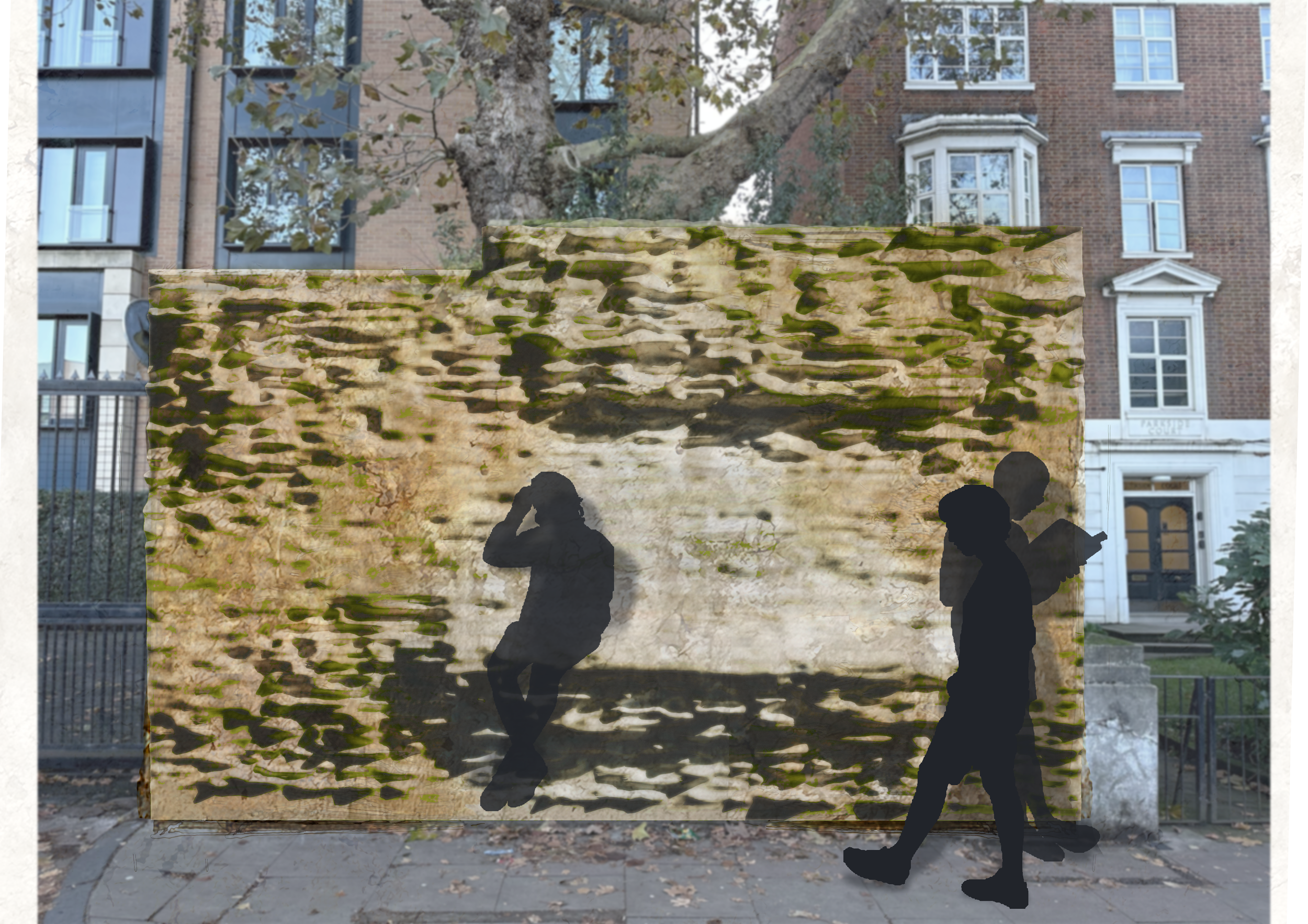
Render of public side with integrated bench
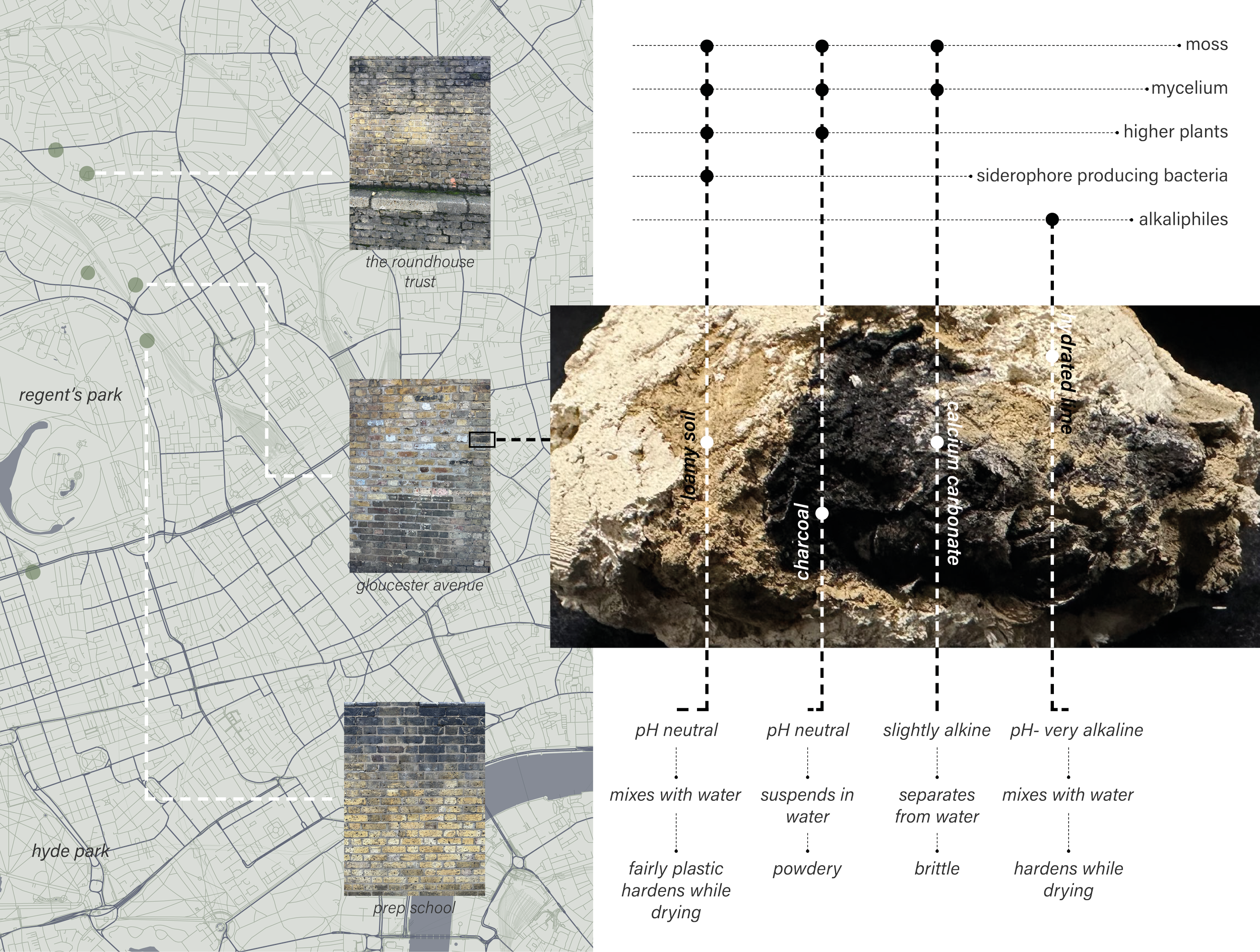
Analysis of brick conditions in London, and the material and biological composition of said walls
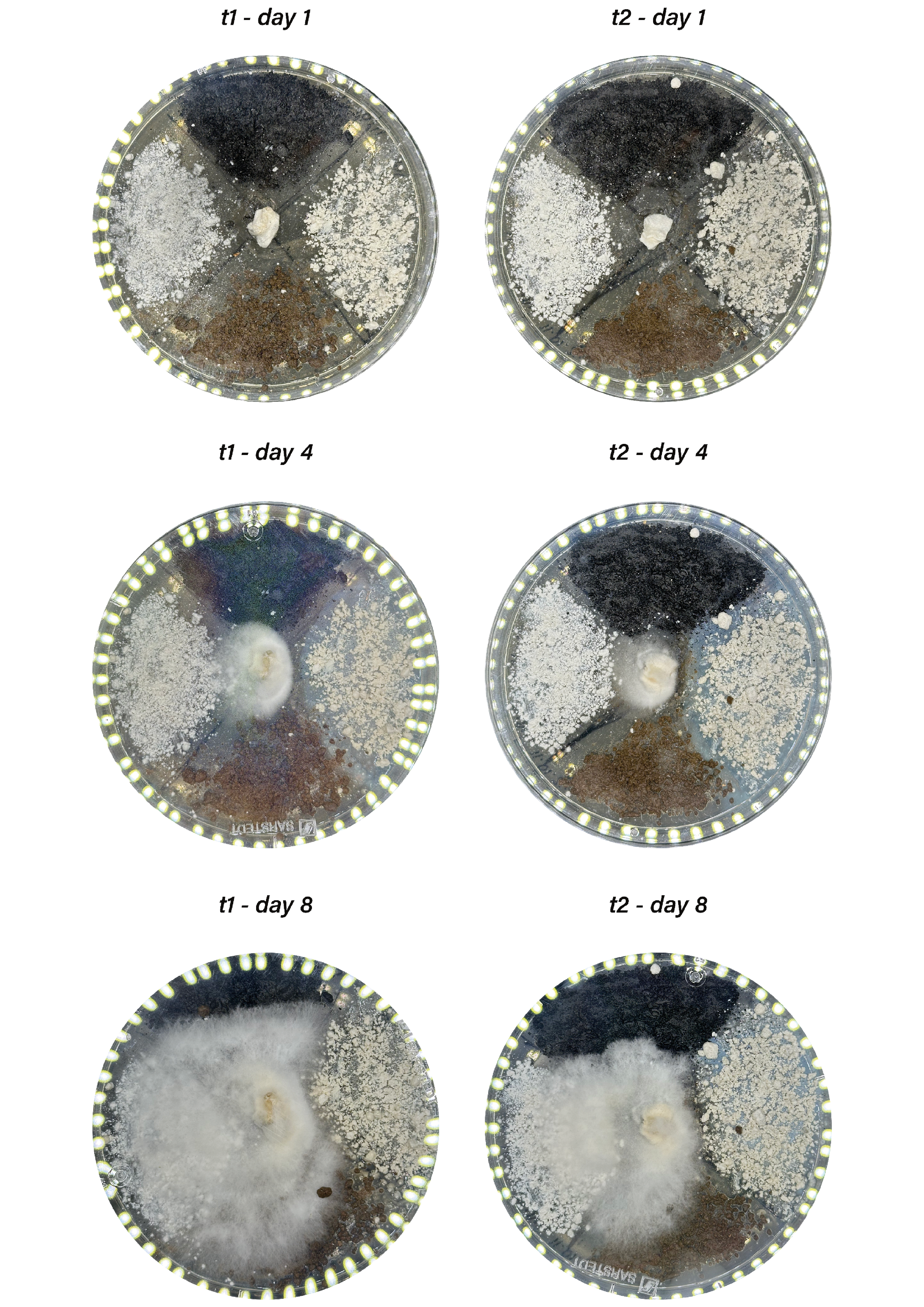
mycelium as material binder- testing attachment
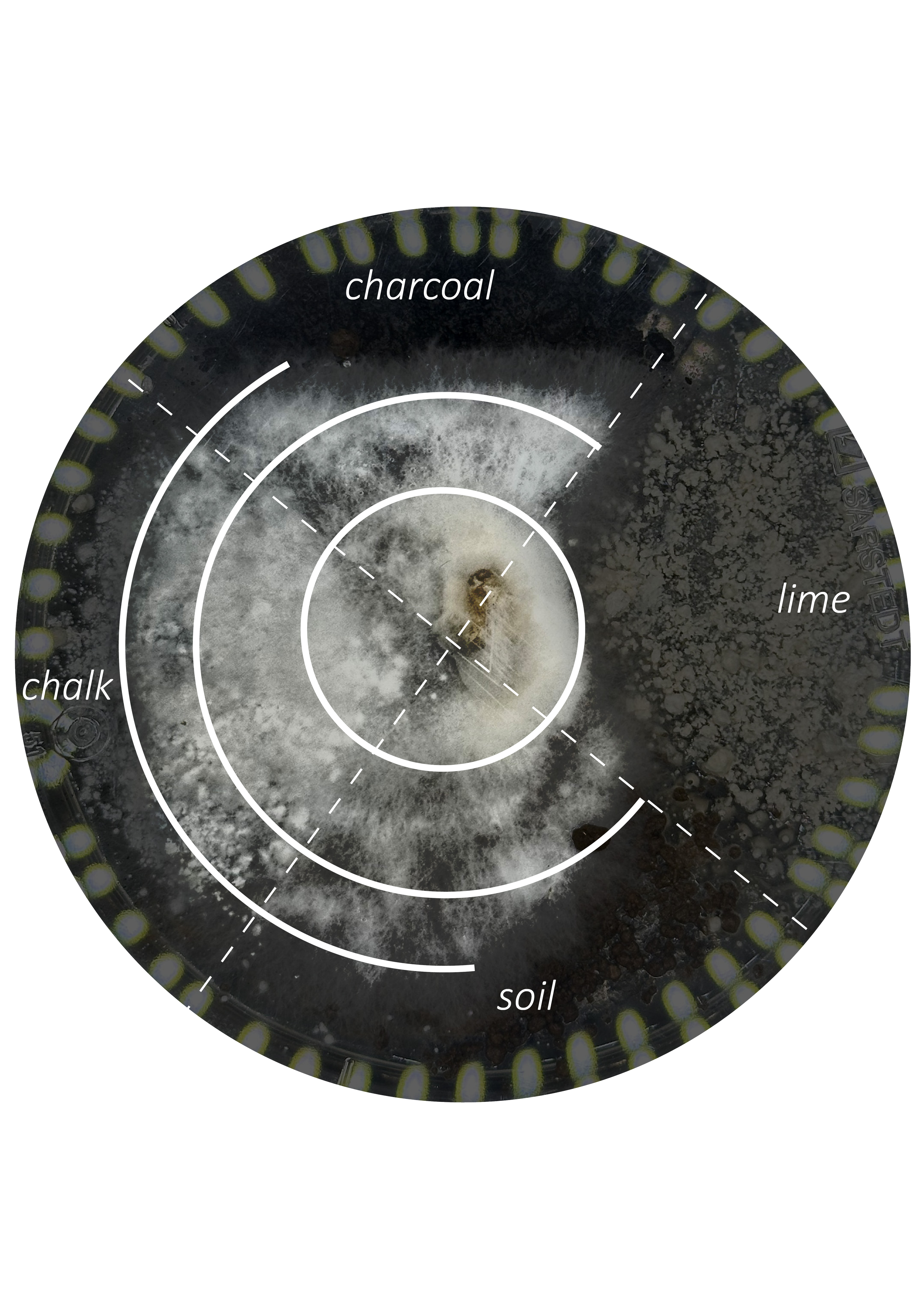
mycelium attachment analysis
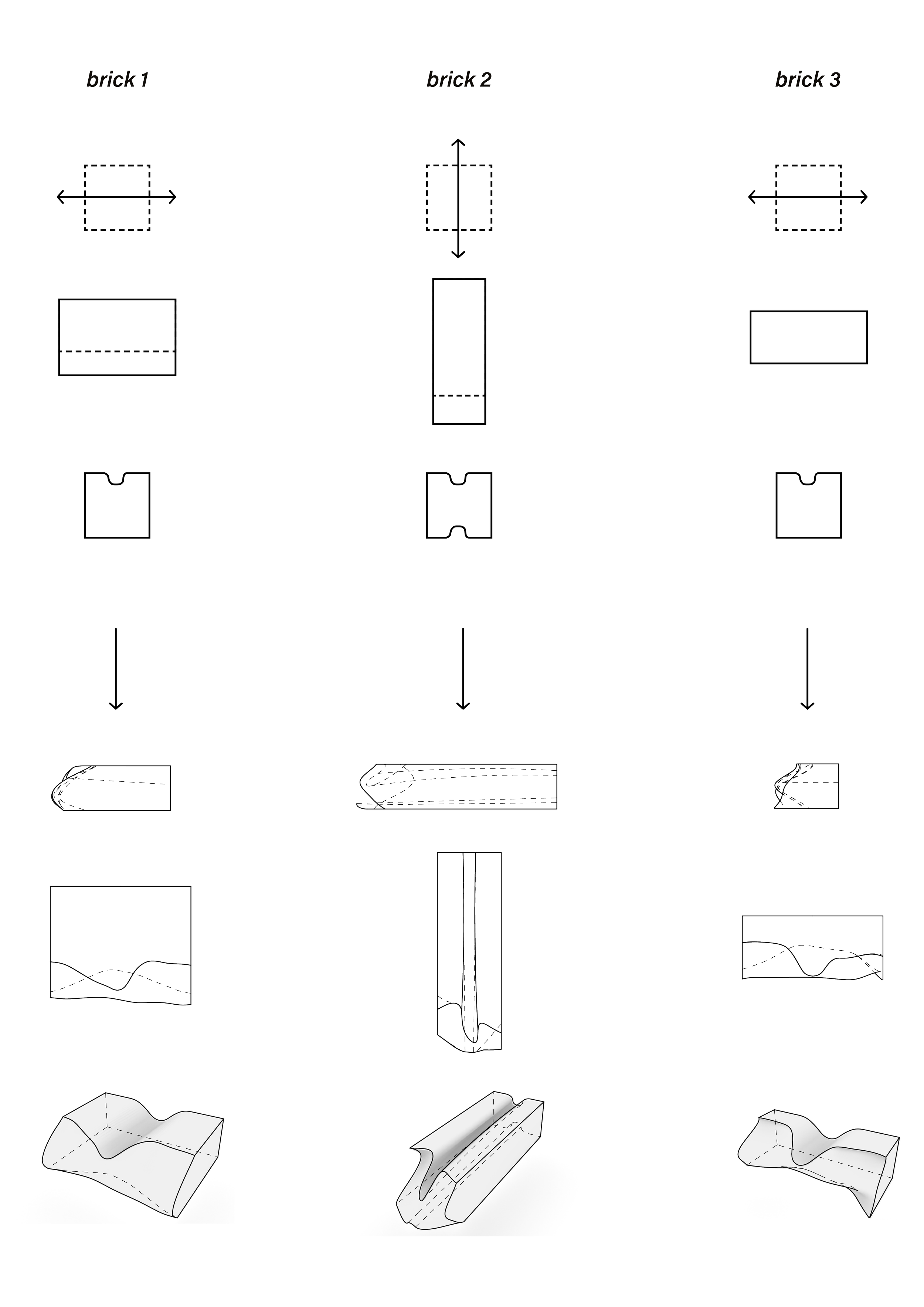
brick form finding
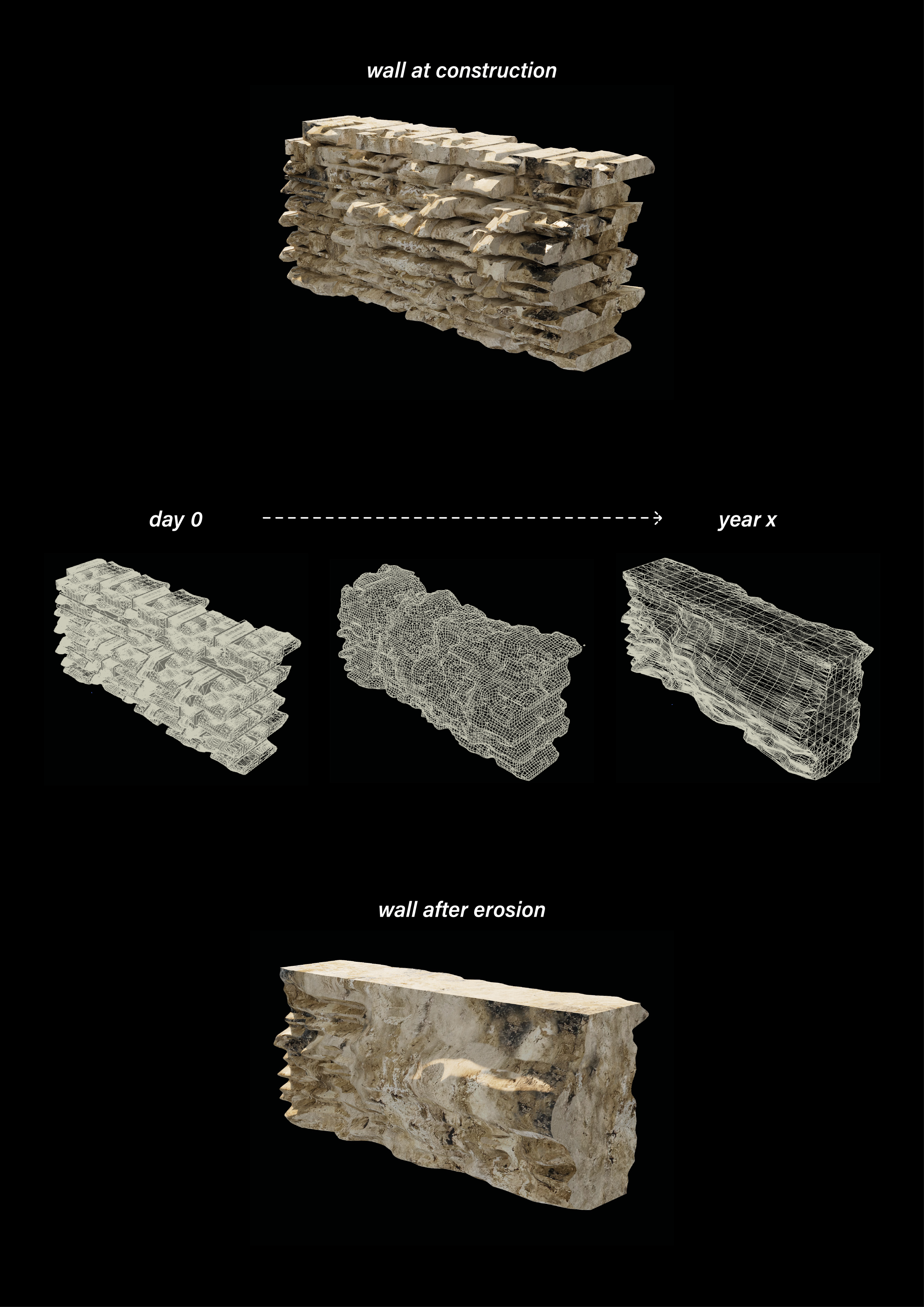
predictive weathering
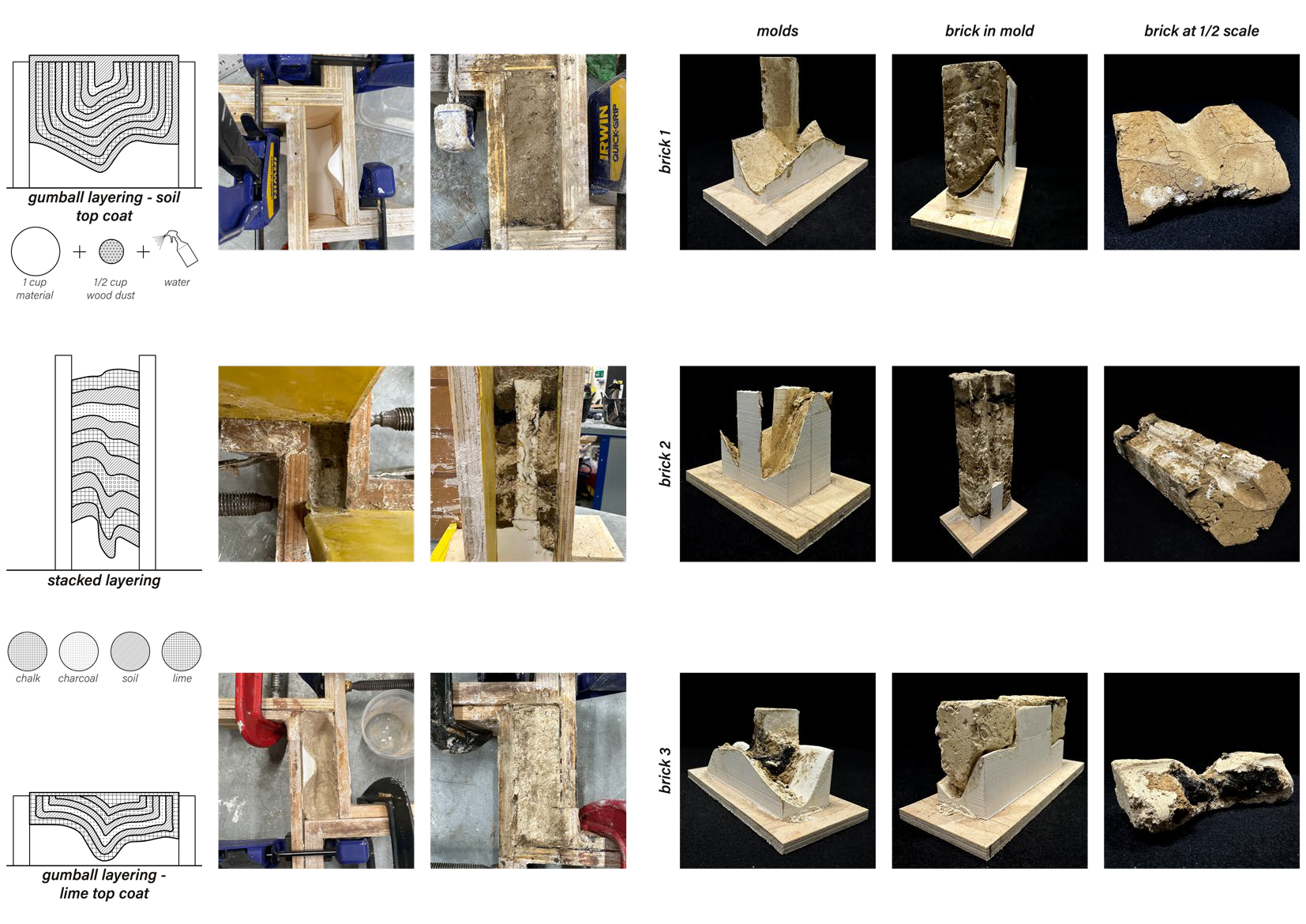
brick making
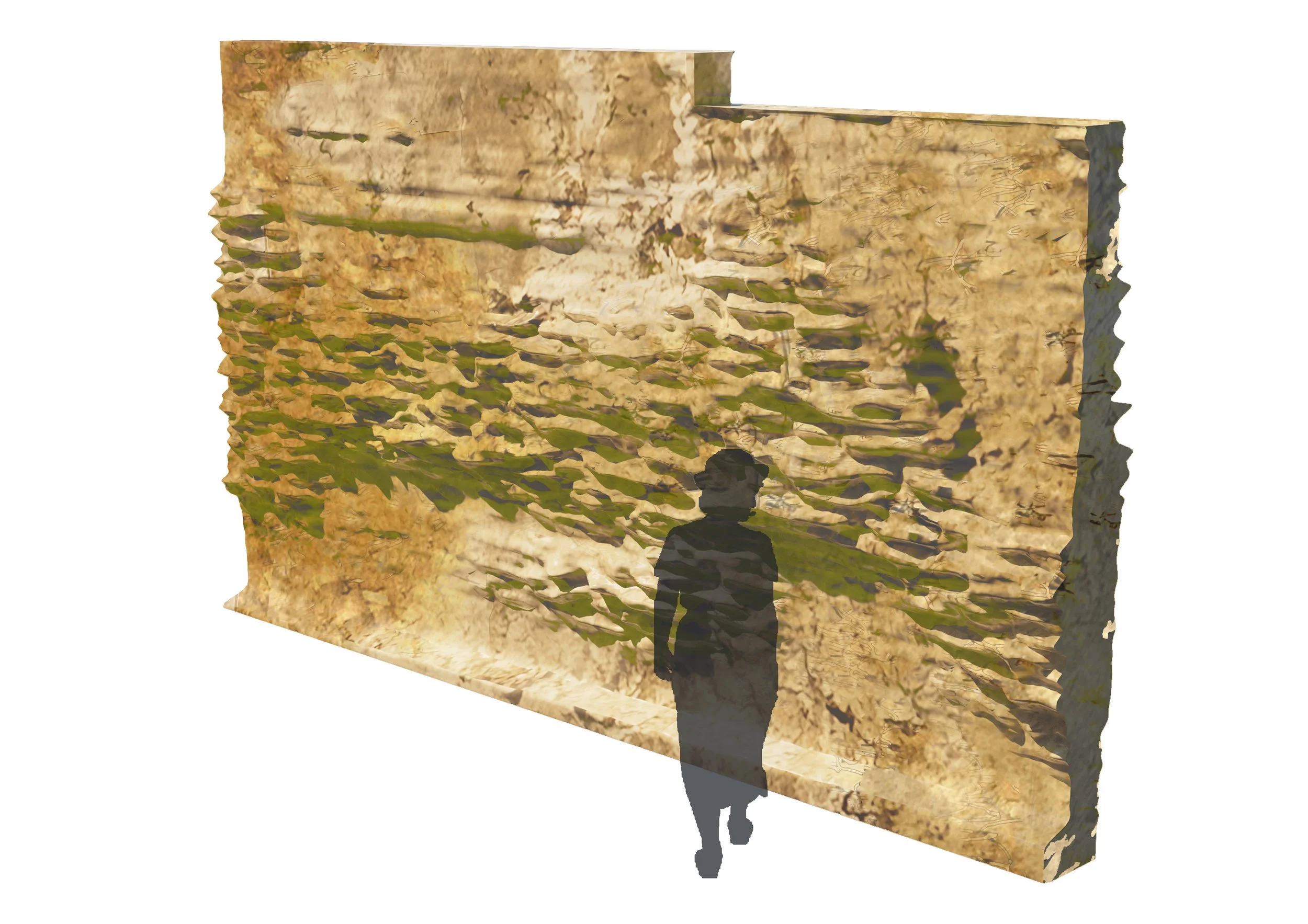
Private side and potential material layering (right) for different weathering patterns over time.
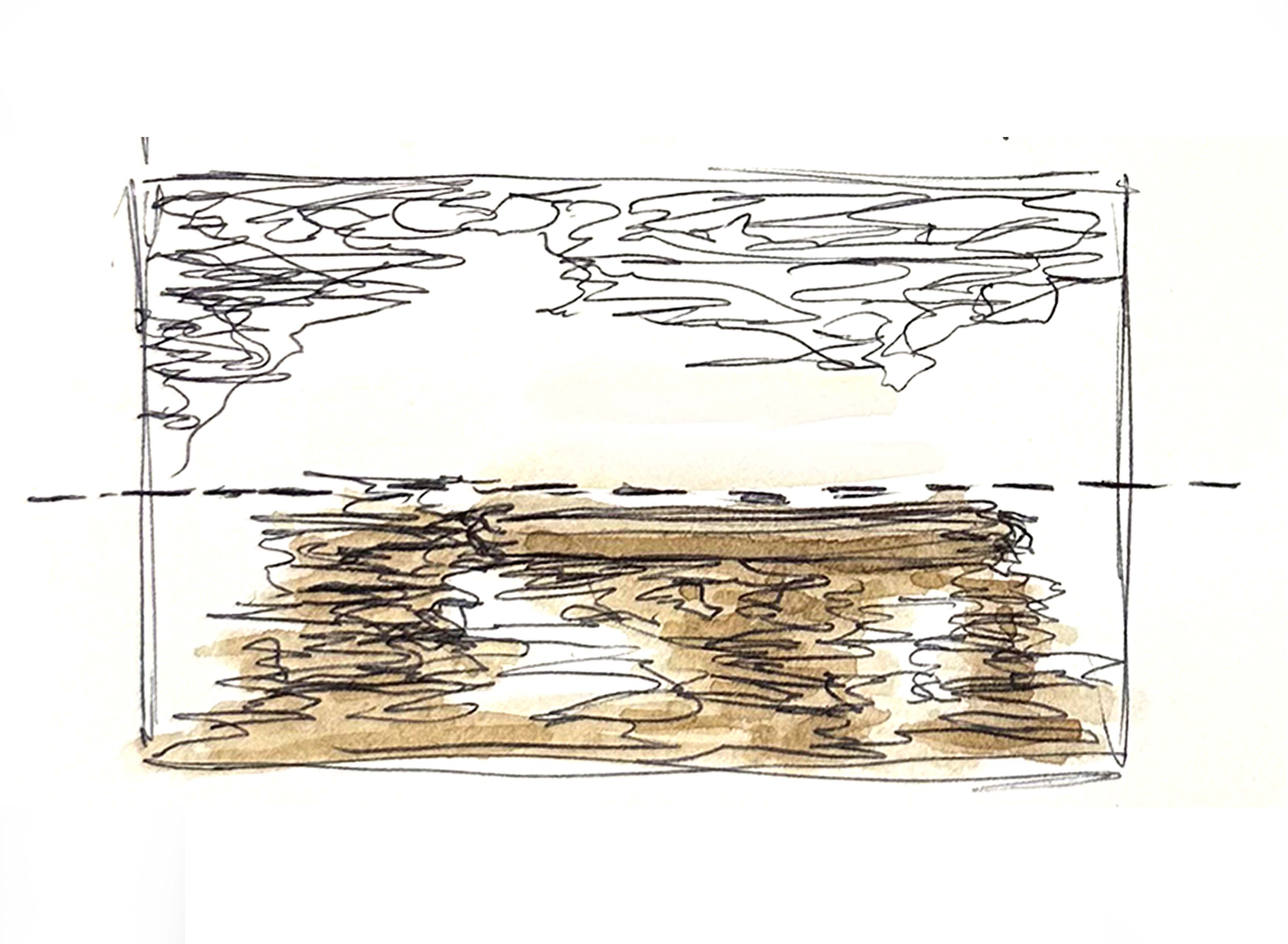
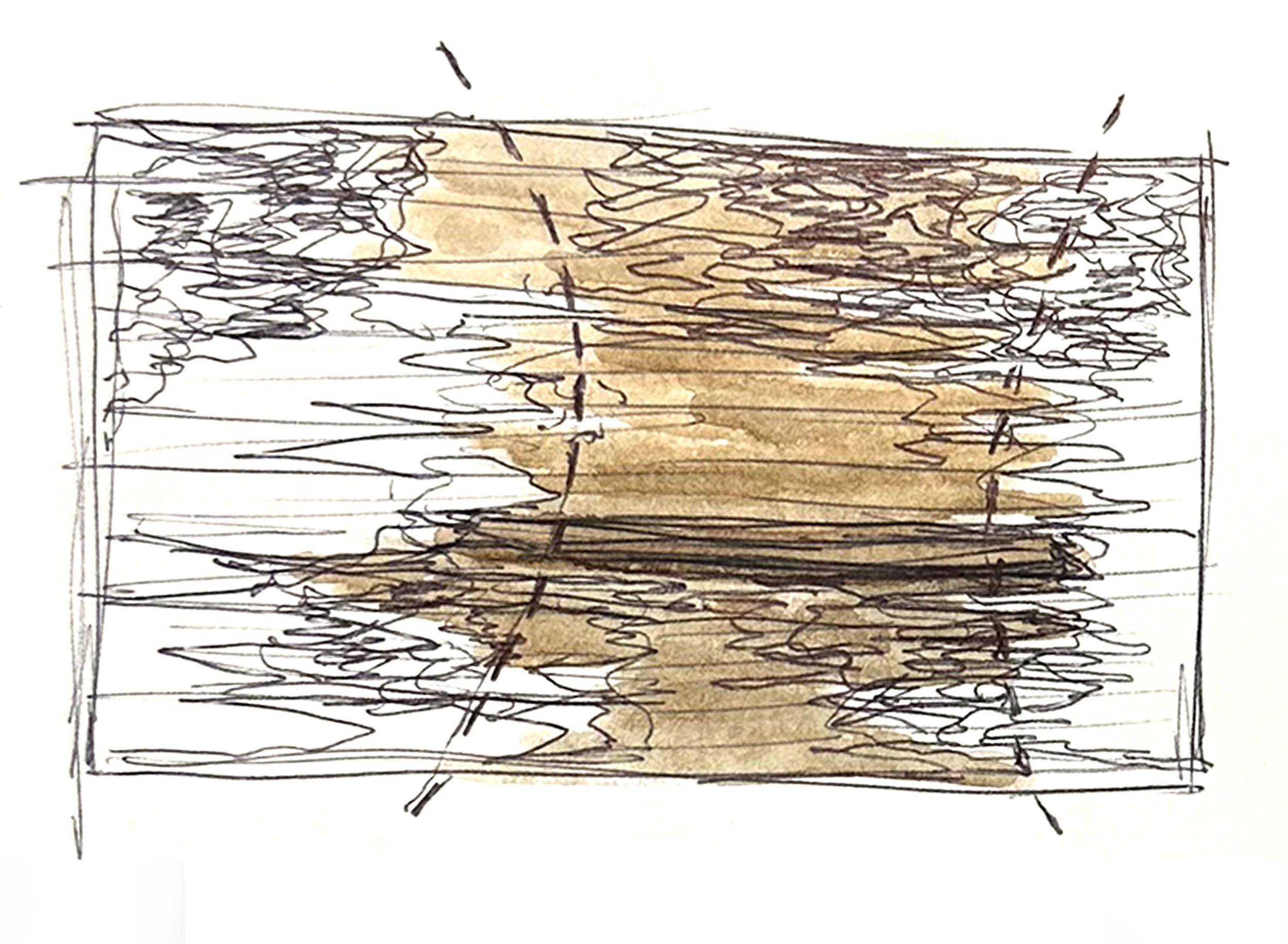
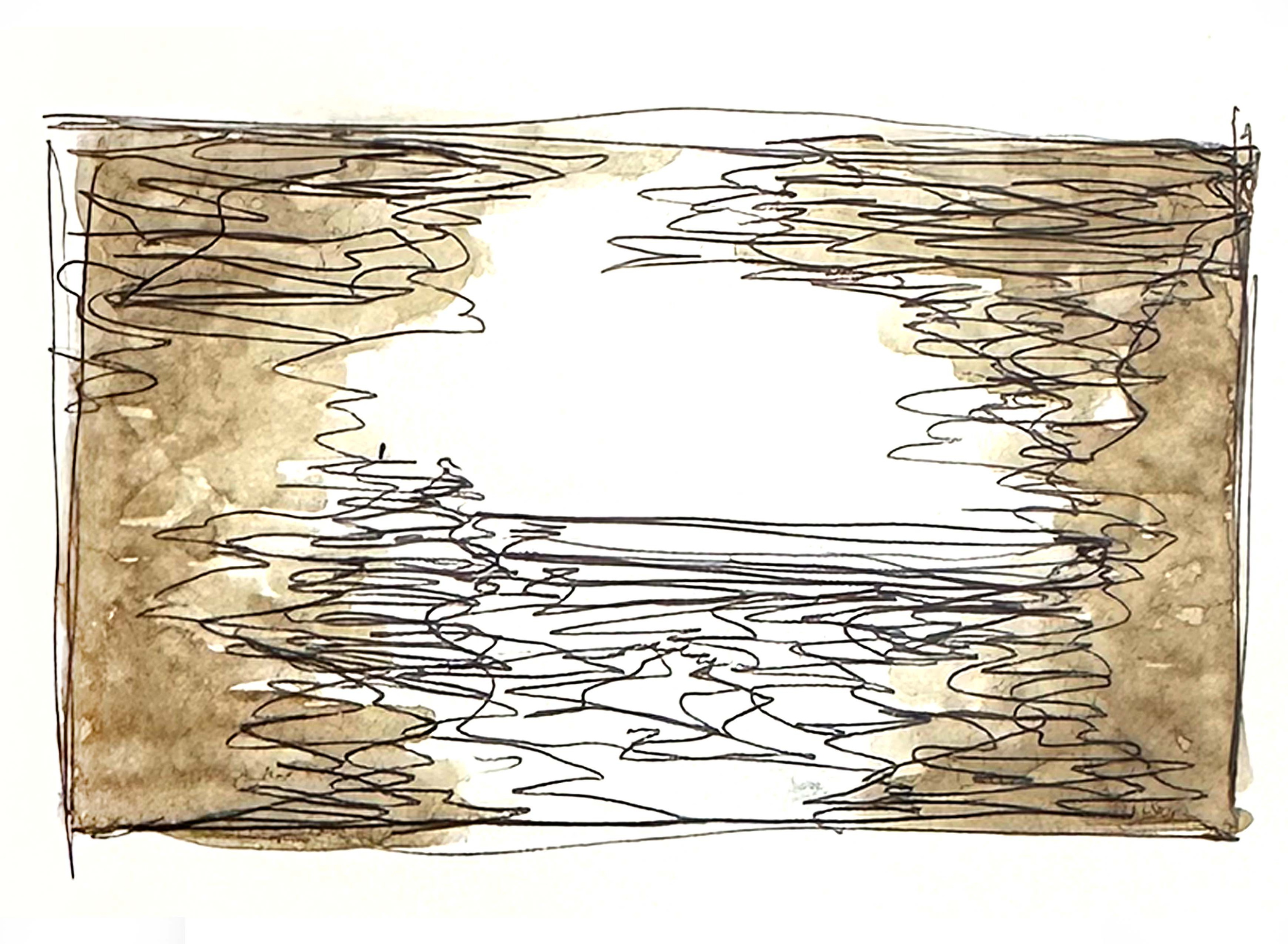
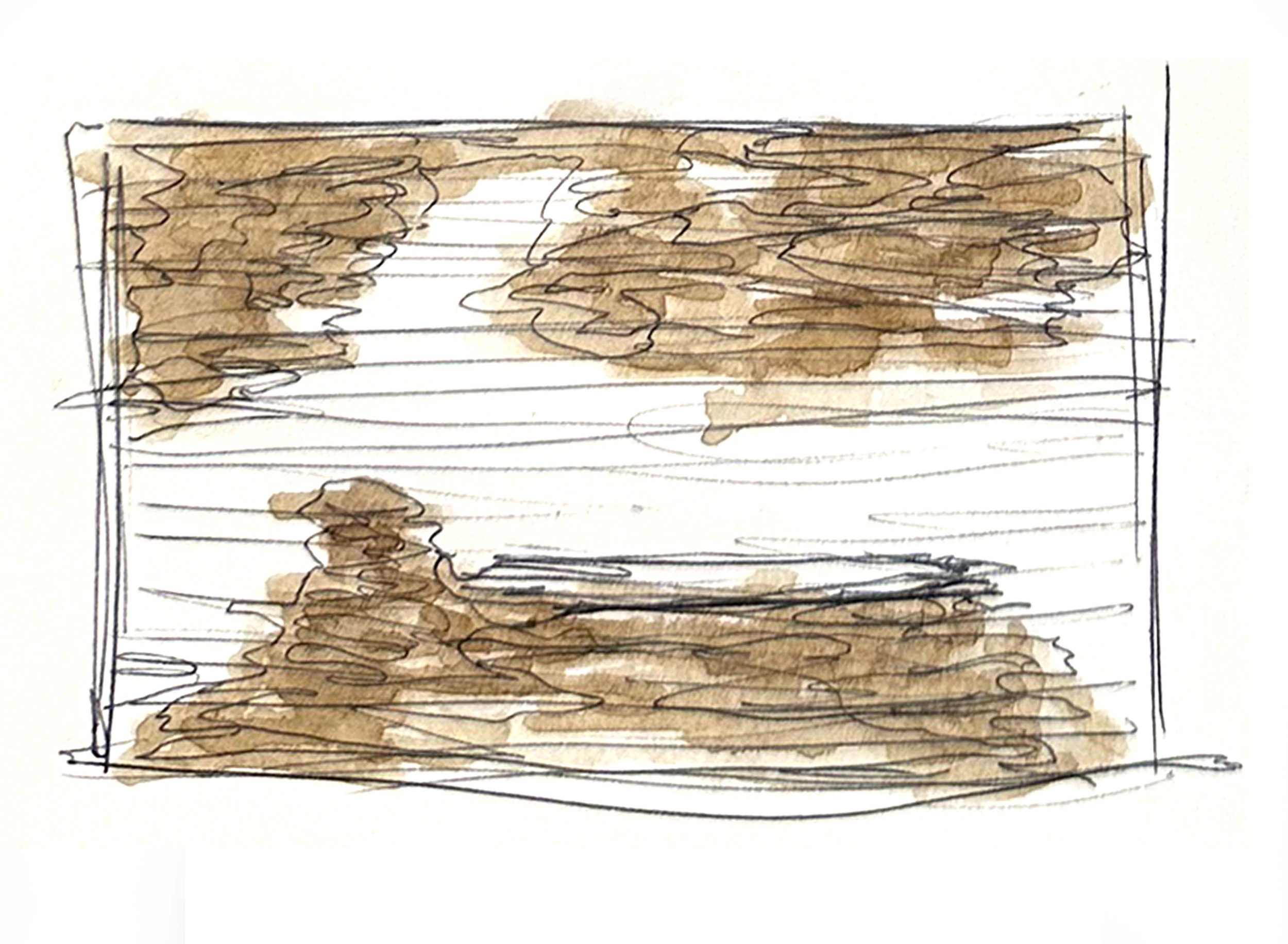
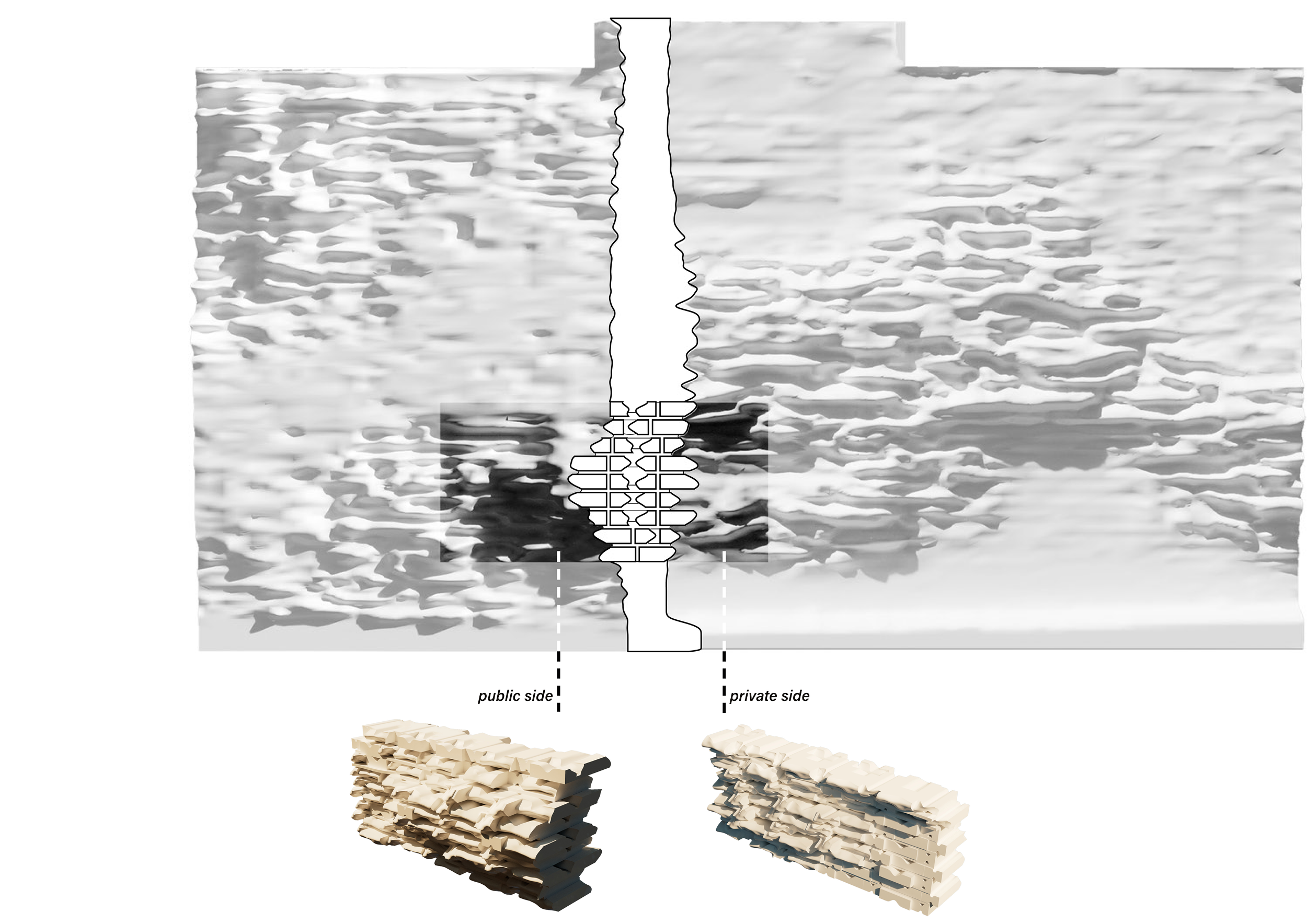
Section cut exploring the porous connection between the two sides
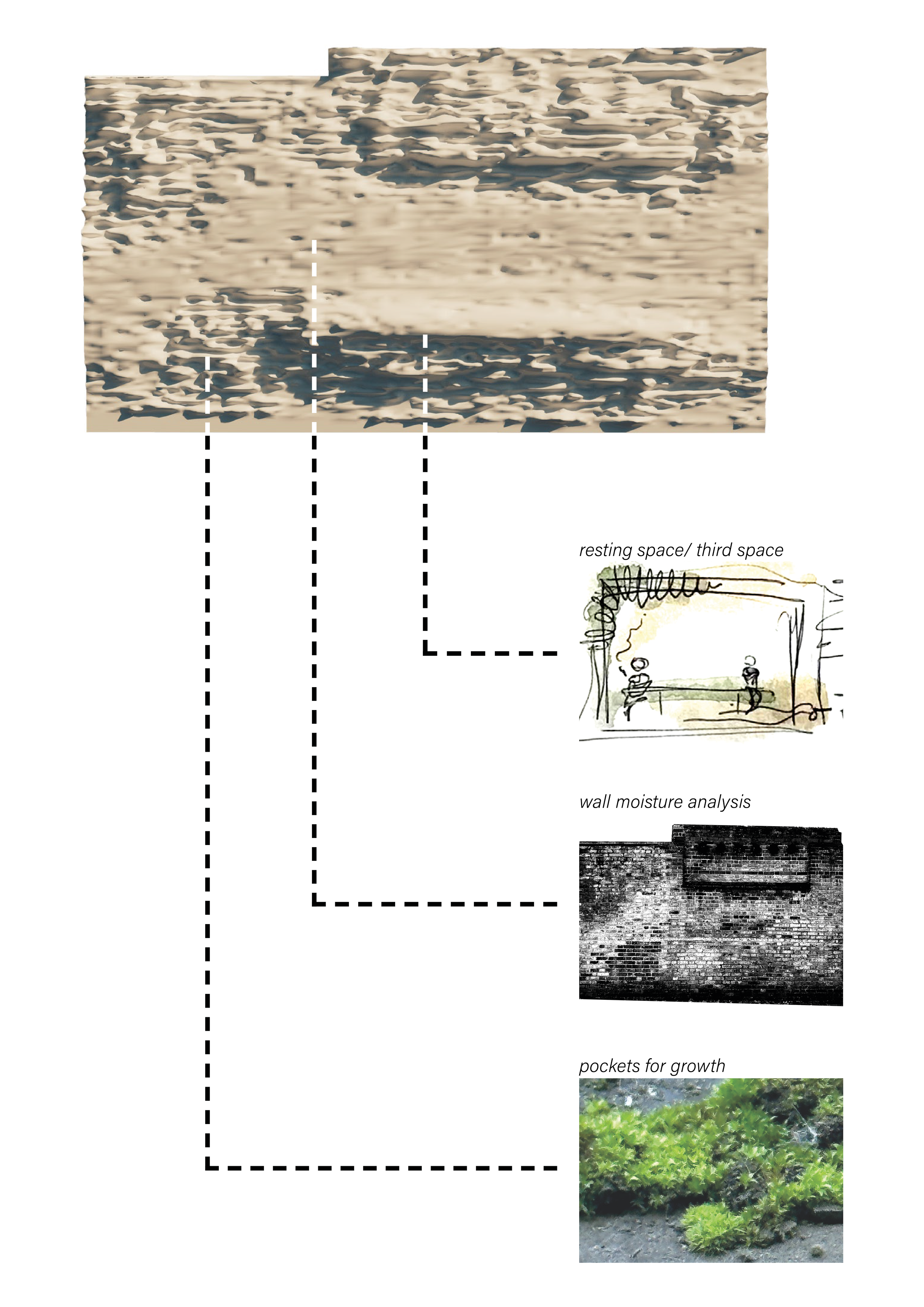
programming
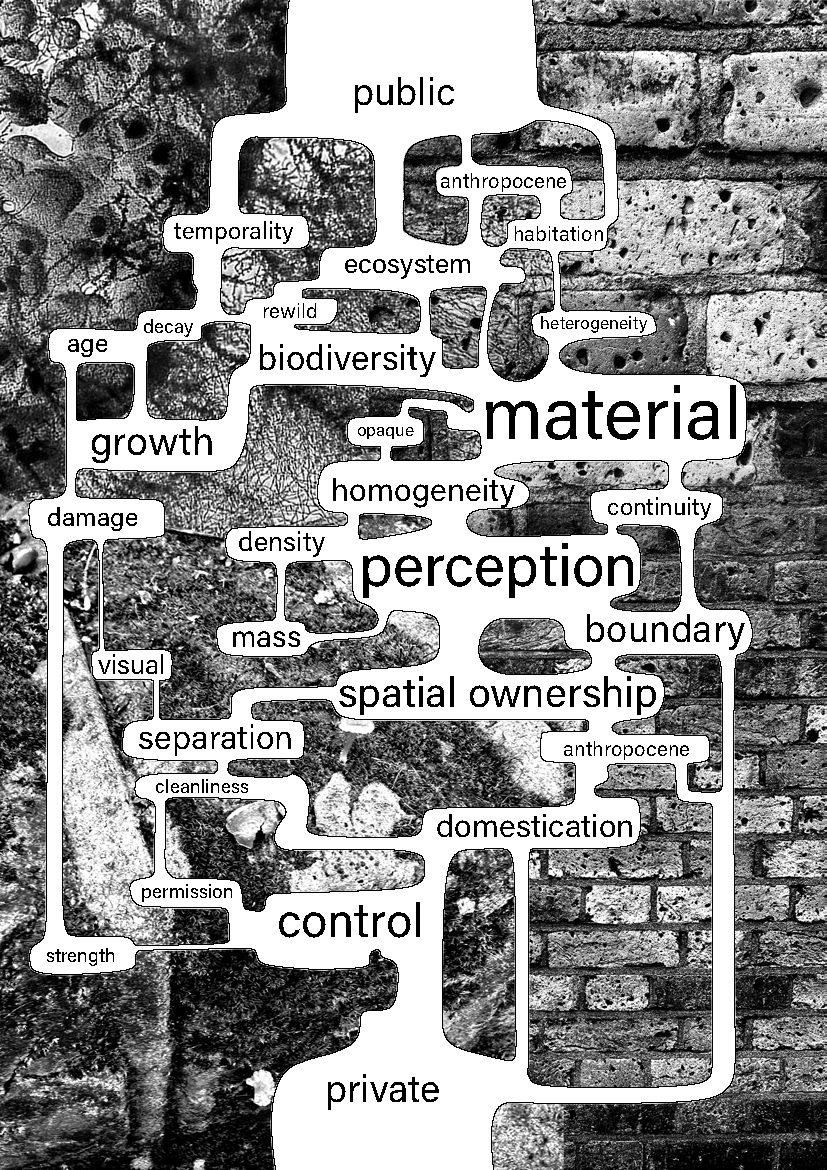
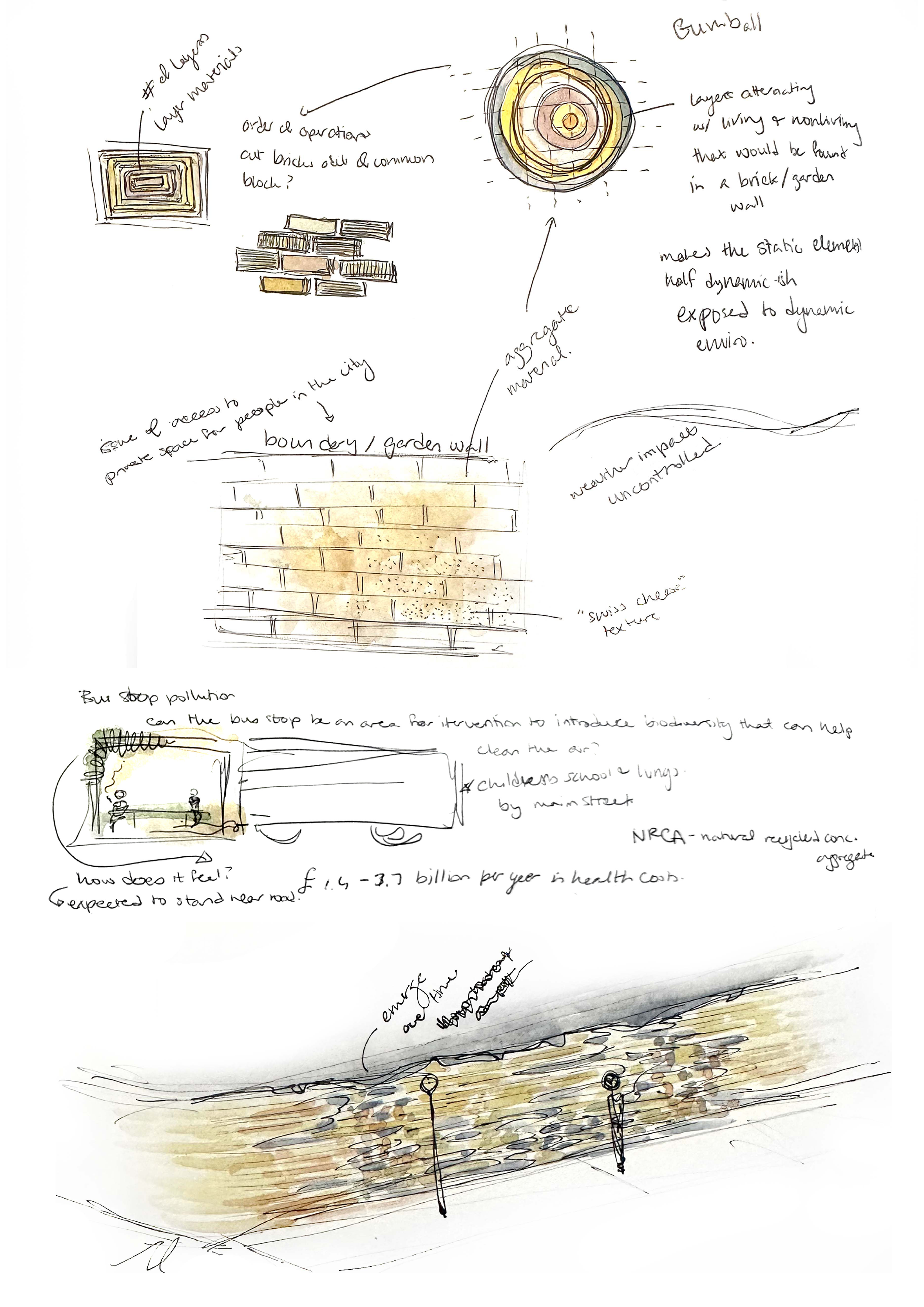
conceptual connections